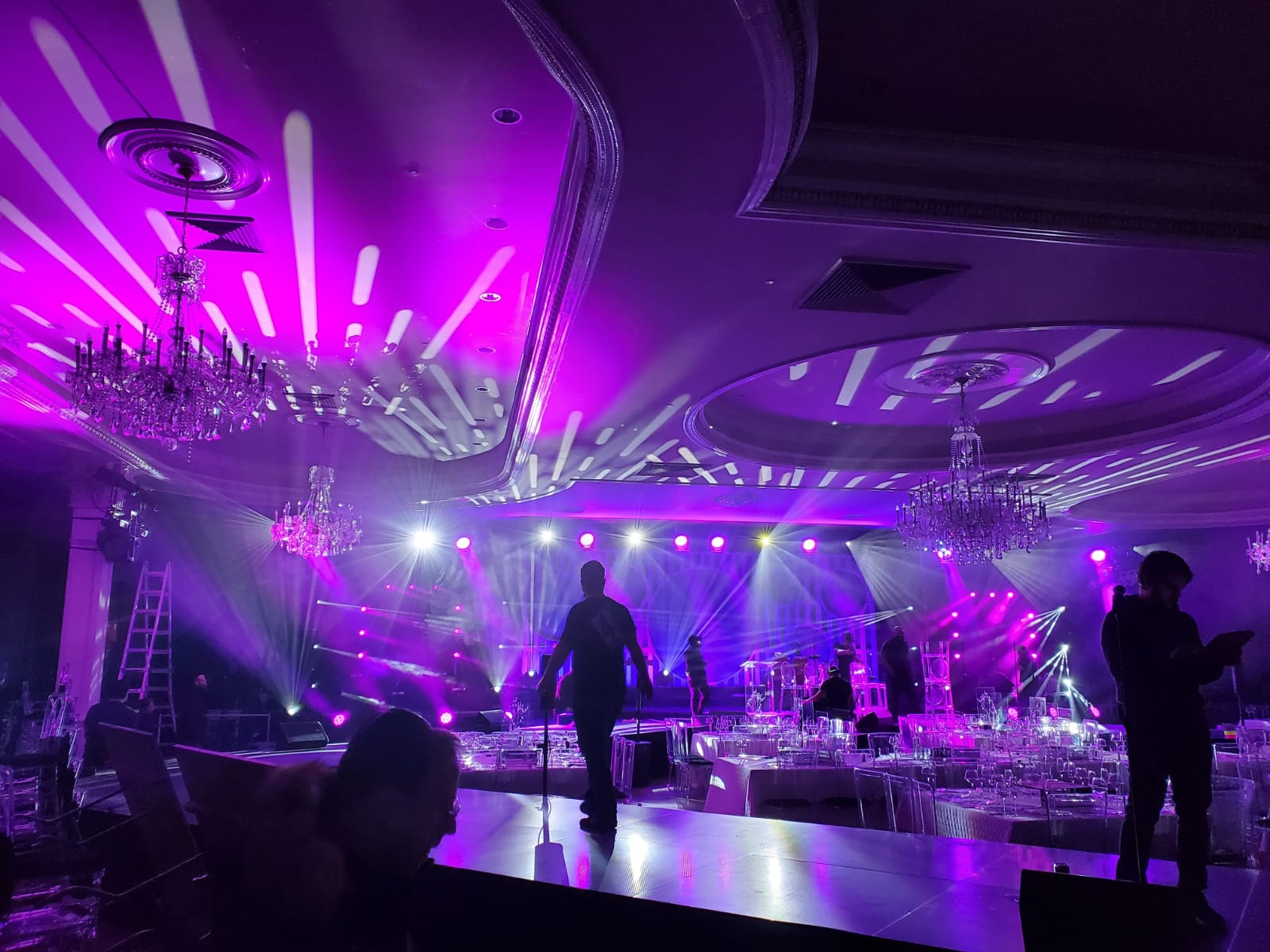
The Hybrid Revolution and the Lighting Control Imperative
The hybrid corporate event — simultaneously serving a live audience and a remote viewership through broadcast or streaming — represents the most significant structural shift in corporate event production since the adoption of video projection in the 1990s. What began as an emergency adaptation during 2020 has calcified into a permanent feature of the corporate events landscape, with companies including Microsoft, Salesforce, and Deloitte now designing flagship events from the ground up for dual-audience delivery. At the center of the technical infrastructure that makes this work — coordinating the lighting environments for both the physical room and the camera frame simultaneously — is the MA Lighting grandMA3, which has become the dominant console platform for hybrid event lighting across more than 200 flagship corporate productions annually.
The lighting challenge of a hybrid event is fundamentally different from either a pure live event or a broadcast studio production. In a live event, the LD optimizes for the audience in the room — dynamic, atmospheric lighting that creates presence and emotion for people experiencing the event in three dimensions. In a broadcast studio, the LD optimizes for the camera — flat, controlled key lighting that renders faces accurately and avoids the overexposure and color cast issues that afflict theatrical lighting when captured on camera. A hybrid event must do both simultaneously, often in a venue not designed for broadcast, using a single lighting console to manage what are effectively two different shows happening in the same physical space.
Camera-Specific Cueing and Multi-Output Programming
The grandMA3’s programming architecture addresses the hybrid challenge through several mechanisms. Most critically, its sequence and cue structure allows an experienced LD to maintain separate cue stacks for live audience lighting and camera-optimized lighting states, with executor assignments that allow instant switching between them as the show transitions from presentation to performance to breakout formats. A hybrid event might run 12 hours of programming across multiple stage configurations, requiring an LD who can simultaneously manage key light levels for 6 roving cameras, maintain atmosphere for 500 people in the room, and execute precise transition timing coordinated with the broadcast director in the remote production suite.
The grandMA3’s network architecture enables a workflow where the broadcast LD — managing camera-specific lighting states — operates from a grandMA3 Light console at a remote video village position, while the event LD works from a grandMA3 Full-Size at FOH. Both consoles share the same show file and see the same fixture universe, but each operates their own executor page with different cue content optimized for their specific audience. The MA-Net3 session protocol synchronizes their state in real time — when the event LD fades the house to a dramatic blackout for an award reveal, the broadcast LD simultaneously triggers camera-friendly keys on the presenter position so the stream audience sees the moment correctly exposed rather than a dark frame.
The Corporate Event Context: Brands, Formats, and Technical Demands
The 200+ hybrid corporate events where MA Lighting platforms anchor the lighting control include an extraordinarily diverse range of formats. Salesforce Dreamforce — a San Francisco-based event drawing 170,000 registrants and global streaming audiences in the millions — deploys grandMA3 systems across the Moscone Center complex, with separate show files for keynote mainstage, breakout theaters, and expo floor activations. The Microsoft Ignite conference, Google I/O, and Apple’s developer conferences represent events where the broadcast audience dwarfs the physical attendance — making the camera-optimized lighting state, and the grandMA3 programming that delivers it, the primary deliverable rather than a secondary consideration.
Production companies specializing in hybrid corporate events — including Freeman, George P. Johnson, Jack Morton Worldwide, and Imagination — have standardized on grandMA3 platforms as the control system of choice for productions at this scale, citing the network stability of MA-Net3, the programming flexibility of the Phaser engine for rapid pre-production, and the global availability of grandMA3-certified programmers who can be deployed internationally as the production travels to its next host city.
The Role of Pre-Programming: Building the Show Before Load-In
Perhaps the greatest enabler of successful hybrid event lighting is the grandMA3’s rich pre-visualization workflow. Using MA 3D visualizer alongside WYSIWYG or Depence3, the production’s lighting programmer can build the complete show file — all cues, all executor assignments, all camera-specific states — in a virtual environment weeks before load-in. This pre-production investment is particularly valuable for hybrid events where rehearsal time is compressed: a CEO keynote with a 90-minute setup window cannot accommodate lighting cue development from scratch on the day of the event.
For over 200 hybrid corporate events each year, across five continents and production formats ranging from intimate board-level meetings to 50,000-person trade shows, the MA Lighting grandMA3 is the platform where the dual-audience challenge is solved — cue by cue, show by show, in the invisible precision of professional event lighting control.
