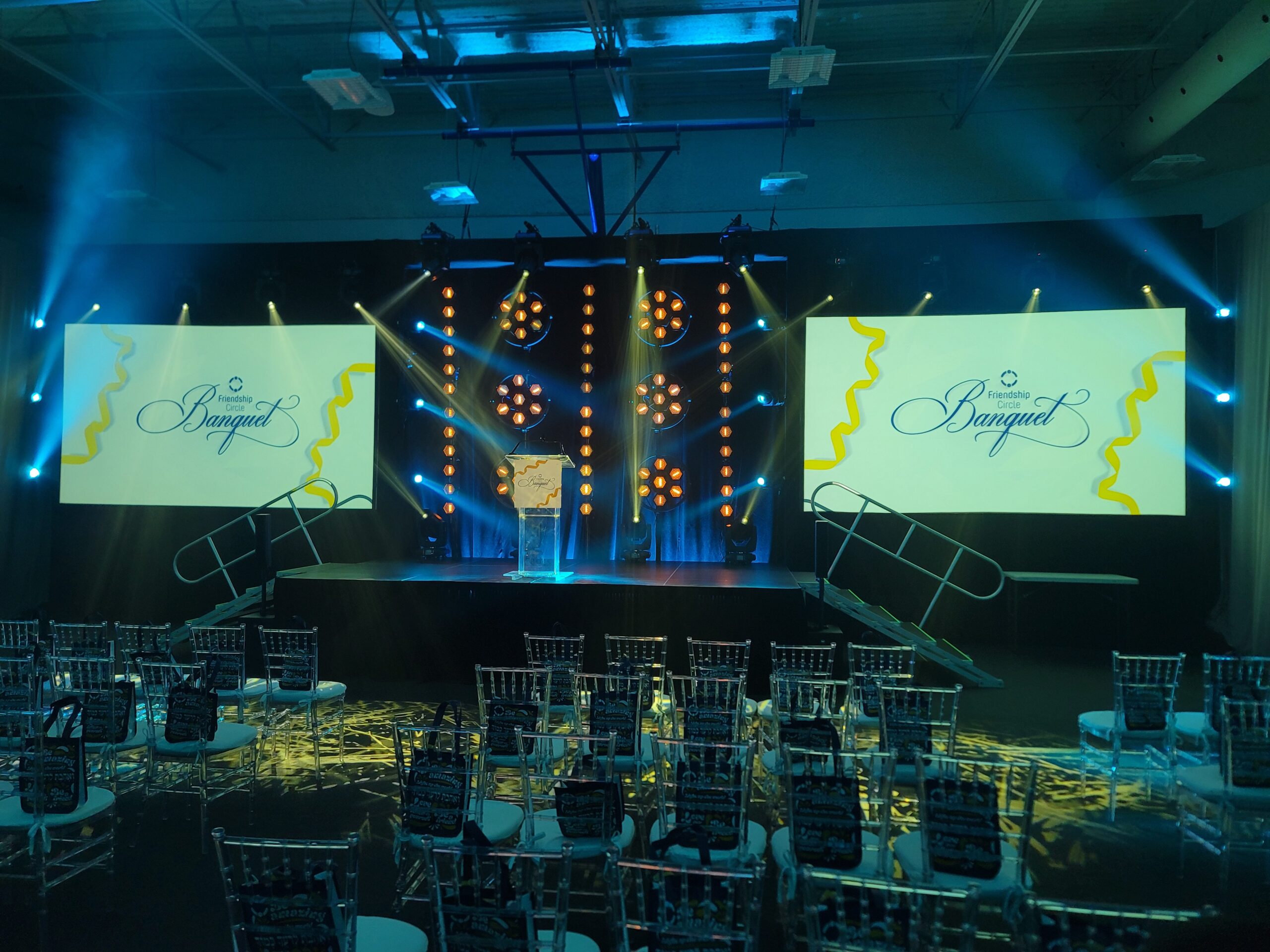
The concert industry has undergone a visual revolution with LED video wall technology becoming the cornerstone of modern stage design. These massive displays transform live performances into immersive experiences, fundamentally changing how audiences connect with artists and music.
Core Technology Components
LED video walls consist of modular panels containing thousands of light-emitting diodes arranged in precise grids. Each panel typically measures 500mm x 500mm or 500mm x 1000mm, connecting seamlessly to create displays ranging from 20 to over 1,000 square meters. The panels use Surface Mount Device (SMD) technology, where red, green, and blue LEDs combine to produce 281 trillion color combinations at maximum specification.
Pixel pitch, the distance between LED clusters, determines viewing quality and optimal distance. Concert venues typically employ 2.6mm to 4.8mm pixel pitch for main stage screens, while 0.9mm to 1.9mm serves backstage monitors and VIP areas. A 3.9mm pixel pitch screen viewed from 12 meters delivers the same visual clarity as a 1080p television viewed from standard living room distance.
Processing Power and Signal Management
Video processors form the neural system of LED walls, handling input signals from multiple sources simultaneously. Industry-standard processors like the Brompton Technology 4K Tessera SX40 can manage up to 4K resolution at 60fps across multiple screen zones. These processors execute real-time scaling, color correction, and frame synchronization, ensuring zero latency between audio and visual elements.
Signal distribution utilizes fiber optic cables capable of transmitting uncompressed 4K video up to 10 kilometers without degradation. Concert productions typically implement redundant signal paths, with automatic failover systems switching to backup feeds within 0.3 seconds if primary signals fail. This redundancy extends to power systems, where uninterruptible power supplies maintain operation during electrical fluctuations.
Brightness and Environmental Adaptation
Concert LED walls operate between 800 and 5,500 nits brightness, automatically adjusting based on ambient light sensors. Indoor arena shows typically run at 1,000-1,500 nits, while outdoor festivals require 4,500-5,500 nits to combat direct sunlight. Modern panels feature high dynamic range capabilities, displaying deeper blacks and brighter whites simultaneously, crucial for maintaining visual impact across diverse lighting conditions.
Weather resistance ratings follow IP65 standards for outdoor panels, protecting against rain, dust, and temperature extremes from -30°C to +60°C. Cooling systems maintain optimal operating temperatures through forced air ventilation or liquid cooling for high-density installations, preventing thermal throttling that could affect performance quality.
Content Management Systems
Media servers specifically designed for live events, such as disguise gx 2c or Pixera four, handle content playback and real-time effects. These systems support multiple video layers, allowing operators to mix pre-rendered content with live camera feeds, generative graphics, and interactive elements. Timeline-based programming synchronizes visual cues with musical arrangements down to individual frames.
NOTCH and TouchDesigner enable real-time content generation responding to audio input, MIDI triggers, or motion sensors. This capability allows visuals to react dynamically to musical elements, creating unique experiences for each performance. Content creators work in specialized color spaces like Rec. 2020, ensuring accurate color reproduction across different LED manufacturers’ panels.
Rigging and Structural Engineering
LED panel weight ranges from 7 to 12 kilograms per square meter, requiring precise structural calculations for safe installation. Ground-supported systems utilize ballasted steel frames distributing weight across multiple points, while flown systems employ certified rigging hardware rated for 10:1 safety factors. Wind load calculations become critical for outdoor installations, with panels rated to withstand sustained winds up to 140 km/h.
Curved configurations use specialized mounting brackets allowing 5 to 15-degree angles between panels, creating concave or convex surfaces. These configurations require additional calibration to maintain image geometry and color uniformity across the curve. Modular frames allow rapid configuration changes between tour stops, with experienced crews assembling 200-square-meter walls in under four hours.
Power Distribution and Efficiency
Modern LED panels consume 150-300 watts per square meter at maximum brightness, significantly less than previous projection technologies. Three-phase power distribution ensures balanced loads across electrical systems, with dedicated circuits preventing interference with audio equipment. Power factor correction maintains efficiency above 0.95, reducing electrical costs and heat generation.
Smart power management systems monitor individual panel consumption, automatically reducing brightness in non-critical screen areas to extend component lifespan. This selective dimming can reduce overall power consumption by 30% without noticeable visual impact. Battery backup systems provide 10-15 minutes of emergency power, allowing controlled shutdown procedures protecting equipment and data.
Investment and Operational Considerations
Concert-grade LED video walls represent substantial investments, with purchase costs ranging from $3,000 to $10,000 per square meter depending on specifications. Rental markets offer alternatives at $500-1,500 per square meter per day, including technical support and transportation. Total cost of ownership calculations must factor in maintenance, storage, transportation, and technical personnel.
The technology continues advancing rapidly, with mini-LED and micro-LED developments promising higher resolutions, improved efficiency, and reduced costs. Industry professionals anticipate 8K resolution becoming standard for large-format displays within three years, while transparent LED technology opens new creative possibilities for stage design. Understanding these technical foundations enables better decision-making for concert producers, technical directors, and investment stakeholders.
