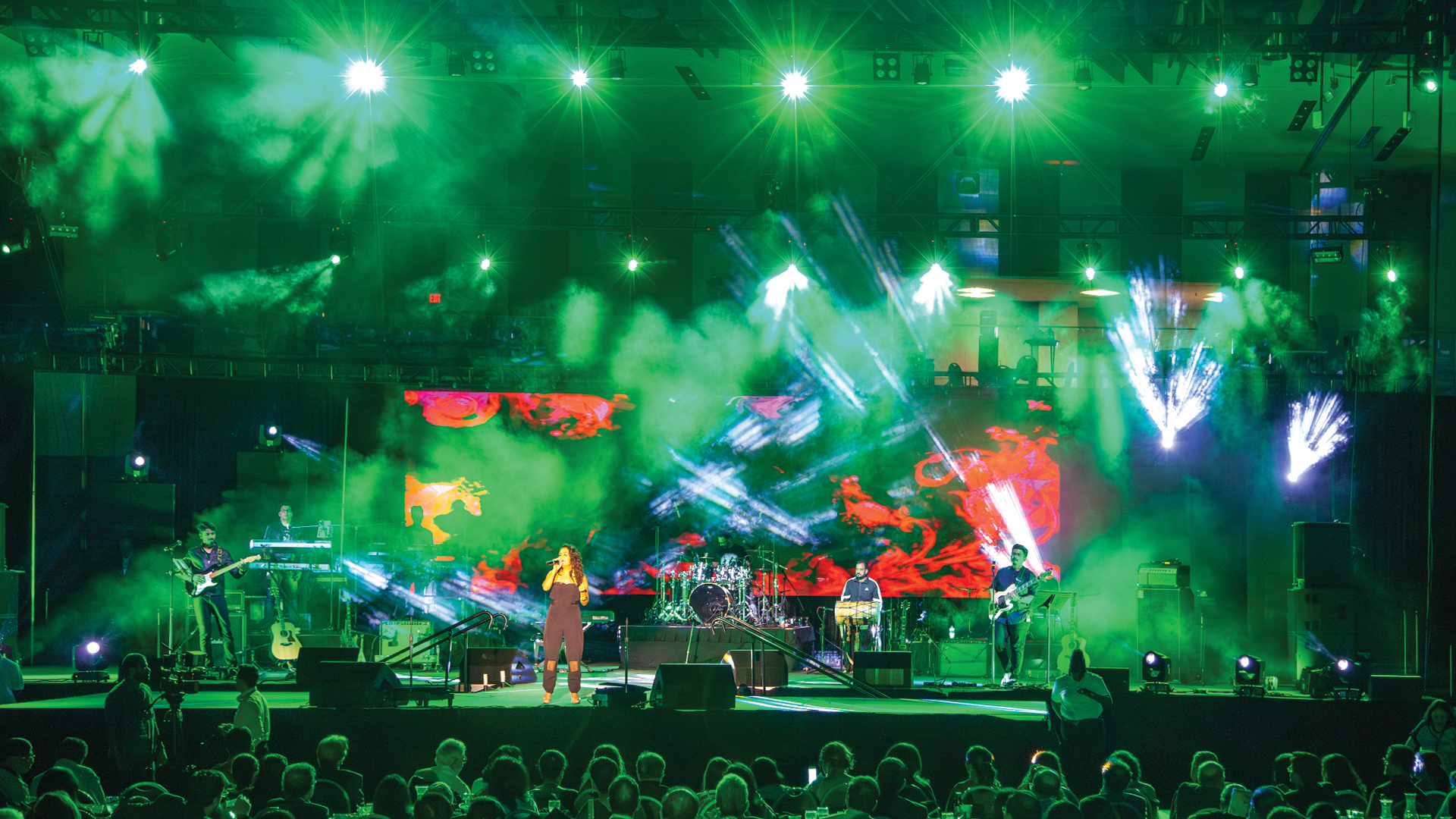
Somewhere between midnight and sunrise, every lighting designer has experienced it: the console developing what can only be described as a personality. Cues that fire without input. Fixtures that drift to unauthorized positions. DMX universes that rearrange themselves according to some inscrutable internal logic. The entertainment lighting industry has accumulated decades of stories about consoles that seemed determined to sabotage productions or perhaps just remind operators that digital systems maintain their own mysterious agendas.
The Digital Ghost in the Machine
Modern lighting control systems represent extraordinary engineering achievements. The ETC Eos family processes thousands of parameters simultaneously across multiple DMX universes. The MA Lighting grandMA3 manages complex pixel mapping and real-time effects while synchronizing with timecode feeds. The Avolites Titan platform enables sophisticated busking workflows for live music applications. Yet each system occasionally exhibits behaviors that defy logical explanation—at least until the root cause emerges from the depths of show file corruption or firmware quirks.
The phenomenon has historical precedent. When computerized lighting control emerged in the 1970s, early systems like the Strand Light Palette and Kliegl Performer introduced the concept of recorded cues replacing manual preset operation. These pioneering consoles stored data on paper tape and later floppy disks media formats prone to degradation and corruption. Operators learned quickly that yesterday’s perfectly programmed show might become today’s chaotic light show if the storage medium decided to reinterpret its contents creatively.
When DMX Develops Opinions
The DMX-512 protocol, standardized by USITT in 1986, remains the entertainment industry’s primary control language. This venerable standard transmits 512 channels of 8-bit data at 250 kilobaud—specifications designed when intelligent fixtures were exotic novelties rather than production staples. The protocol’s simplicity enables reliability, but its lack of error correction means corrupted packets pass through unchanged. A single flipped bit transforms a subtle color correction into a full-intensity strobe effect.
Experienced operators recognize DMX termination issues by their symptoms: fixtures flickering randomly, parameters drifting without input, and that distinctive moment when an entire moving light rig decides to point at the audience simultaneously. The humble 120-ohm terminator—a five-dollar component—prevents signal reflections that cause these behaviors. Yet termination remains the most frequently forgotten element in lighting systems, blamed for countless ‘ghost’ phenomena that technicians initially attribute to supernatural forces or console malfunctions.
The Cue Stack That Remembered Differently
Every console has firmware, and firmware has bugs. The tracking behavior that makes theatrical lighting design efficient—where only changed values record into cues—occasionally produces unexpected results. A designer might program cue 47 with specific gobo rotations and color mixing values, only to discover during performance that earlier modifications to cue 12 propagated forward through the entire show in ways that defy the console’s documented tracking logic.
The MA Lighting grandMA2 series—the industry standard for touring and festival production before the grandMA3’s release—developed legendary quirks related to its programmer handling. The ‘phantom programmer’ phenomenon became so well-known that operators developed rituals to clear active values before each show, treating the console like a temperamental artist requiring specific preparation. The command sequence ‘Clear, Clear, Clear’ entered industry vocabulary as both troubleshooting procedure and nervous habit.
Network Nightmares in the Art-Net Age
The transition from hardwired DMX cabling to Art-Net and sACN protocols multiplied both capability and complexity. A single ethernet connection now carries dozens of DMX universes—16,384 individual channels per Art-Net port. This efficiency comes with network dependencies that introduce new failure modes. IP address conflicts, subnet misconfigurations, and switch latency issues create symptoms that appear identical to console malfunctions.
The ETC Net3 gateway and Luminex network switches provide robust infrastructure, but misconfigured IGMP snooping settings can cause selective universe dropouts that baffle operators. The console shows proper output, the network infrastructure indicates normal operation, yet specific fixtures respond erratically or not at all. The troubleshooting process requires knowledge spanning lighting control, network engineering, and occasionally dark arts involving managed switch configurations.
The Fixture Profile Conspiracy
Lighting consoles communicate with fixtures through fixture profiles—software definitions that map console parameters to DMX channels. When a Martin MAC Viper Profile receives commands through an incorrect profile, the results range from subtle color inaccuracies to complete chaos. The GDTF format (General Device Type Format) promises standardization, but legacy fixtures and custom profile modifications create ongoing compatibility challenges.
Manufacturers update fixture firmware regularly, occasionally changing DMX mapping without corresponding profile updates. A perfectly functional show file from last month’s tour might produce bizarre behaviors on this month’s rental fixtures running newer firmware. The Robe ESPRITE or Claypaky Sharpy Plus sitting in the rental warehouse might respond differently than the identical model number from the tour package, simply due to firmware version discrepancies.
War Stories from the Console Position
Industry veterans collect console malfunction stories like battle scars. The Broadway production where an ETC Ion began executing cues in reverse sequence during act two—later traced to a corrupted show file sector that inverted the cue stack’s index pointers. The arena tour where every grandMA2 console on the network simultaneously reset during the headliner’s signature ballad—caused by a session synchronization conflict that propagated a reboot command across the entire system.
The corporate event where an Avolites Arena decided that all fixtures should point directly at the CEO during his keynote address—not dramatically from various angles as programmed, but literally, every unit aimed at a single point. Investigation revealed that the position palettes had merged during a show file import, combining every recorded position into an averaged value that happened to intersect at executive head height.
Defensive Programming Strategies
Experienced designers develop protective habits through accumulated trauma. Show files save incrementally with version numbers—never overwriting the previous known-good version. Backup consoles run in synchronized mode, ready for instant failover if the primary develops personality disorders. The Eos Ti backup system and grandMA3 session management provide robust redundancy—when configured correctly and tested regularly.
The pre-show ritual includes more than fixture testing. Operators verify DMX termination, confirm network topology, check fixture firmware versions against profile expectations, and run through critical cues while monitoring actual output rather than console displays. The console might indicate perfect values while the fixtures receive corrupted data—trust but verify applies equally to digital systems and human assistants.
The Future of Intelligent Misbehavior
As lighting control systems incorporate artificial intelligence and machine learning for automated busking and effect generation, the potential for unexpected behaviors expands. Systems like SoundSwitch and integrated Philips Hue Sync algorithms interpret audio input to generate lighting responses sometimes with results that surprise even their programmers.
The coming generation of IP-native lighting fixtures will communicate bidirectionally, reporting their status and potentially negotiating their own parameters. The RDM protocol already enables remote configuration, and future systems will expand these capabilities dramatically. Whether fixtures that can advocate for themselves will prove more reliable or simply more creative in their rebellions remains to be seen.
Until then, operators maintain their vigilance, their backup systems, and their sense of humor about the consoles that occasionally decide to interpret programming instructions creatively. The lighting industry learned long ago that technology serves human creativity but sometimes it develops creative interpretations of its own. The professional response involves preparation, redundancy, and the wisdom to recognize that apparent malfunctions usually have logical explanations, even when those explanations require significant investigation to discover.
