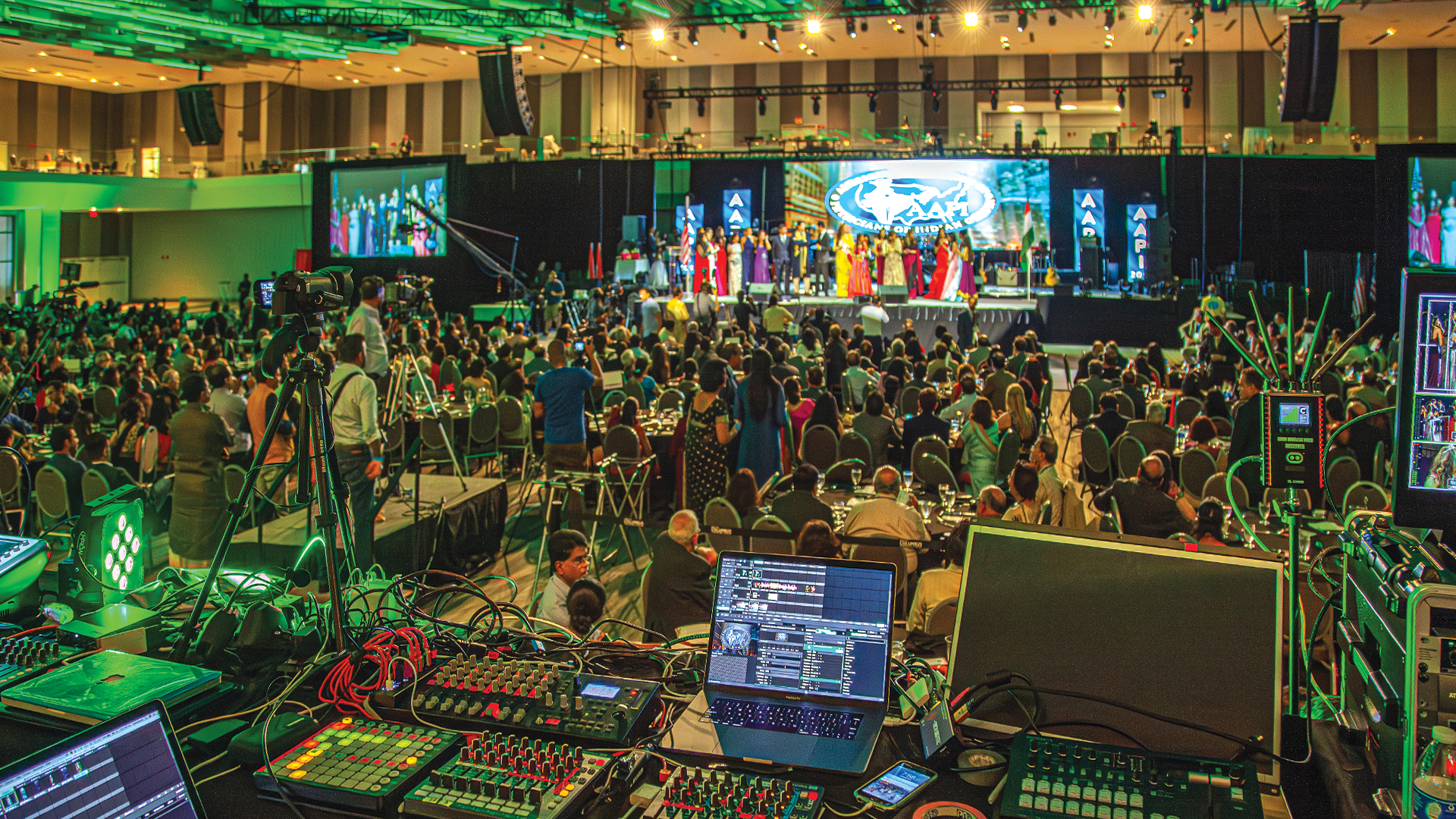
The pre-show signal path check is the last line of defense between a production’s technical infrastructure and the audience. It is the moment when the distance between theoretical system design and operational reality closes — when you find out whether the signal chain you engineered on paper actually delivers clean, reliable signal from every source to every destination in the sequence the show demands. Missing this window is not a recoverable error. Missing it means you find the problem during the show, in front of the audience, with no time and no grace.
The discipline of systematic pre-show testing has evolved alongside the increasing complexity of live production systems. In the analog era, a complete signal check on a club show might take 15 minutes. A contemporary large-format corporate event with networked audio, multi-screen video, wireless microphone systems, IEM infrastructure, show control, and streaming output can require a structured two-hour verification protocol executed by multiple technicians working in parallel — all of it needing to complete before doors open.
Build the Test Protocol Before the Show Day
The single most important step in effective signal path testing is building the test protocol document during pre-production, not on the morning of the show. This document lists every signal path in the system — audio inputs, audio outputs, video sources, video destinations, control data paths, intercom circuits, monitoring feeds, and streaming outputs — organized by department and ordered by logical test sequence.
Each entry in the protocol should specify what the pass condition looks like: what level or signal quality confirms that the path is operating correctly, what tool is used to verify it, and who is responsible for the check. A protocol built in Google Sheets or a dedicated production management platform like Flex allows multiple technicians to check off completed tests in real time, giving the technical director a live view of overall system readiness as the check progresses.
Audio Signal Path Verification
The audio signal path check starts at the physical source — every microphone position, every instrument DI, every playback source — and traces the signal forward through every stage box, patch bay, console input, processing unit, console output, amplifier input, and speaker output. Every stage in this chain is a potential failure point, and the check must confirm signal presence and quality at each one.
For systems running Dante or AES67 audio networking, the Dante Controller application provides a real-time view of all network devices and their routing status. Confirm that every Dante route is correctly established before beginning the acoustic check — a routing error that looks like a console input problem will waste significant diagnostic time if the network routing isn’t verified first. DiGiCo SD-Range consoles and Yamaha CL/QL series both provide onboard network status displays, but the dedicated Dante Controller application provides deeper visibility into device status and clock synchronization health.
Use a calibrated test tone — typically a 1kHz sine wave at a defined reference level — to trace signal through the chain rather than relying on speech or music. A sine wave at a known level can be measured precisely at every point in the chain, making level discrepancies and noise floor issues immediately visible on a meter that live programme material would mask.
Wireless System Verification
Wireless microphone and IEM systems require their own dedicated verification sequence before any acoustic testing begins. RF spectrum scans using Shure Wireless Workbench or Sennheiser WSM (Wireless Systems Manager) should be completed first to identify any interference sources occupying the frequencies assigned to production wireless. Coordination that looked clean in an office using online frequency coordination tools can look very different when the actual venue environment — HVAC systems, LED lighting infrastructure, building wifi networks — is fully operational.
For each wireless channel, the verification sequence should confirm: frequency assignment is correctly programmed in both transmitter and receiver; RF signal strength is adequate across the full working range of the performance space; audio quality is clean with no intermittent dropouts; and the battery status monitoring system is reporting correctly through the console or wireless management software. On systems using Shure Axient Digital or Sennheiser Digital 6000, the ShowLink remote management capability allows comprehensive monitoring and frequency management from the FOH position — but that capability only works correctly if the antennas and RF distribution infrastructure are verified first.
Video Signal Path Verification
Video signal verification follows source-to-screen: confirm at each stage that the signal is present, the format is correct — resolution, frame rate, color space, HDR metadata — and that the physical display or recording destination is receiving a clean image. Use calibrated SMPTE color bars as the test signal rather than live programme material. Color bars contain specific reference levels — the pluge signal for black level, the 100% white patch for peak white, and the chroma burst for color accuracy — that allow technical verification of display calibration as part of the signal check.
For LED wall systems, this includes the full-white field test revealing dead modules, the full-black field test revealing ghost illumination, and the grey ramp test confirming that gamma calibration is applied evenly across all panels. Systems running Brompton Tessera processors or Novastar VX controllers will show calibration status in the processor’s monitoring interface — confirm that all modules are reporting calibrated status before accepting the visual check as complete.
Intercom and Communications Verification
Production intercom systems are the nervous system of the show, and their failure is catastrophic in ways that aren’t always obvious until a critical cue moment. Clear-Com Eclipse HX, RTS OMNEO, and Green-GO digital intercom all require verification of every key station, beltpack, and IFB circuit before the show. This check should include every program feed, every talk path, and every listen-only circuit — and it must be conducted with the actual production team, not a surrogate, because intercom issues that only manifest when a specific combination of stations is active simultaneously will not be found in a single-point check.
The Final Walk Before Doors
After the systematic protocol check is complete, the most experienced technical directors conduct a physical walk of the entire stage and FOH area — not looking at meters and screens, but looking at the physical system. Is every cable that should be connected actually connected? Are there any cables that have been disconnected during the last hour of rehearsal activity that haven’t been restored? Are any fixtures showing fault indicators that weren’t there during the light check? This walk is not a substitute for the protocol check — it is the final layer of quality assurance that catches the category of errors that protocol checks, by their nature, cannot: the physical change that happened after the check was completed. On every major production, it catches something. Every time.
