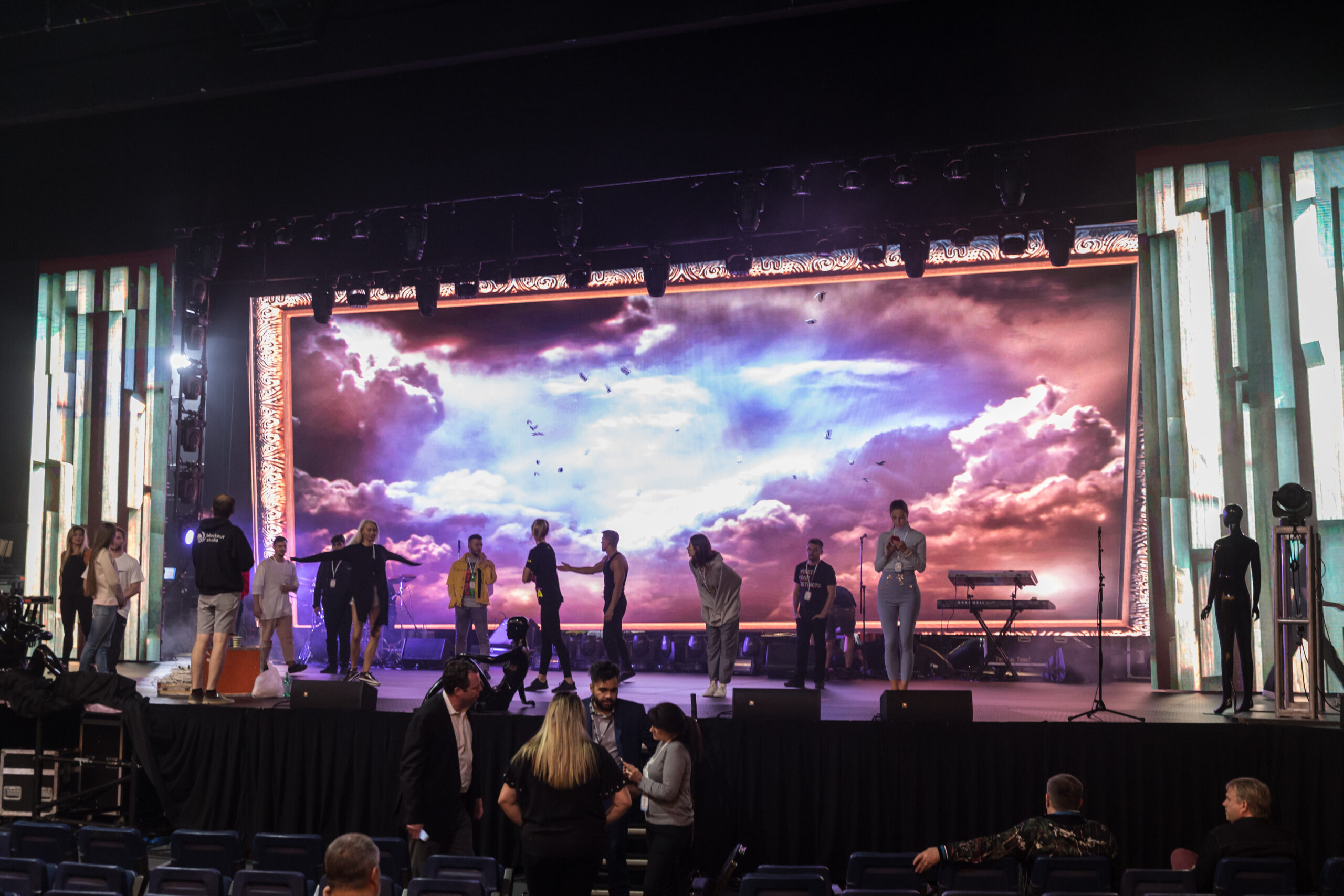
The product launch looked spectacular during rehearsal—then the venue opened its massive skylights for the daytime event, and suddenly the carefully designed LED presentation became nearly invisible behind a wall of reflected glare. The sleek black LED surface that looked premium in controlled lighting transformed into a mirror showing the ceiling, the audience, and everything except the intended content. Managing glare on LED screens in bright venues requires understanding both the physics of reflection and the practical solutions that mitigate it.
Understanding LED Surface Reflection
LED panels feature protective surfaces that inevitably reflect some ambient light. The surface treatment—matte, semi-gloss, or glossy—determines reflection characteristics. Glossy surfaces produce sharper, more defined reflections that can obscure content entirely when bright sources reflect directly toward viewers. Matte surfaces scatter reflected light, reducing specular highlights but potentially reducing contrast and color saturation. The ROE Visual Black Marble and similar products feature specialized coatings designed to minimize reflection while maintaining image quality.
Viewing angle determines whether reflections become problematic. The law of reflection means incoming light bounces at an angle equal to its arrival angle. A ceiling light directly above a horizontal LED floor reflects toward viewers at low angles; the same light reflects away from viewers standing directly in front of a vertical wall. Understanding these geometric relationships guides both screen positioning and ambient light management.
Venue Assessment and Light Control
Before specifying anti-glare solutions, production teams should assess ambient light conditions during actual event times. Morning light differs from afternoon; cloudy days differ from sunny. Site visits at the intended event time reveal what light sources exist, what directions they come from, and what options exist for controlling them. Windows, skylights, architectural lighting, and even reflections from shiny surfaces all contribute to the ambient light that LED screens must overcome.
Controlling light at its source often proves more effective than treating symptoms. Window treatments—blackout curtains, blinds, or temporary coverings—can dramatically reduce ambient light. Dimming venue lighting during content-critical moments reduces competition from overhead sources. Repositioning LED screens to avoid direct reflection paths from unchangeable light sources sometimes solves problems that no surface treatment can address. The most elegant solutions eliminate glare sources rather than fighting their effects.
Anti-Glare Panel Technologies
Manufacturers have developed various approaches to reducing LED panel reflectivity. Common cathode LED technology improves contrast by reducing internal reflections between LED components. Black LED encapsulation absorbs ambient light rather than reflecting it, maintaining contrast under challenging conditions. Anti-reflection coatings similar to those used in camera lenses reduce surface reflectivity significantly. Products like the Absen KL II Series and Unilumin UpadIII specifically target high-ambient applications with these technologies.
Hood and louver systems physically block light from reaching the panel surface at problematic angles. These additions project forward from the display surface, intercepting light before it can reflect toward viewers. The tradeoff involves reduced viewing angles—viewers at extreme positions see the hoods rather than the screen. For applications with defined viewing areas, this limitation proves acceptable for the glare reduction achieved. Custom hood fabrication matched to specific ambient conditions optimizes the balance between glare reduction and viewing coverage.
Brightness as a Countermeasure
When ambient light cannot be sufficiently controlled, overwhelming it with brightness becomes the alternative strategy. A 5,000-nit outdoor LED panel remains visible in direct sunlight because its output exceeds ambient light levels by sufficient margin. Indoor LED panels typically achieve 800-2,000 nits; high-brightness variants push to 3,000 nits or higher for challenging environments. The power consumption and thermal management requirements of high-brightness operation must factor into planning—more brightness means more heat and more electrical infrastructure.
Content design influences perceived brightness without changing actual output. High-contrast graphics with bold colors remain visible in conditions that wash out subtle imagery. White text on dark backgrounds maintains readability when the same content with moderate gray backgrounds would disappear. Advising content creators about ambient conditions enables them to design graphics optimized for actual viewing environments rather than ideal controlled conditions.
Managing LED glare combines technical solutions, environmental control, and design accommodation. Productions that approach the challenge systematically—assessing conditions, controlling what can be controlled, specifying appropriate equipment, and adapting content design—achieve visibility in environments that would defeat unprepared approaches. The bright venue challenge is solvable, but solving it requires understanding the problem deeply enough to apply the right combination of solutions.
