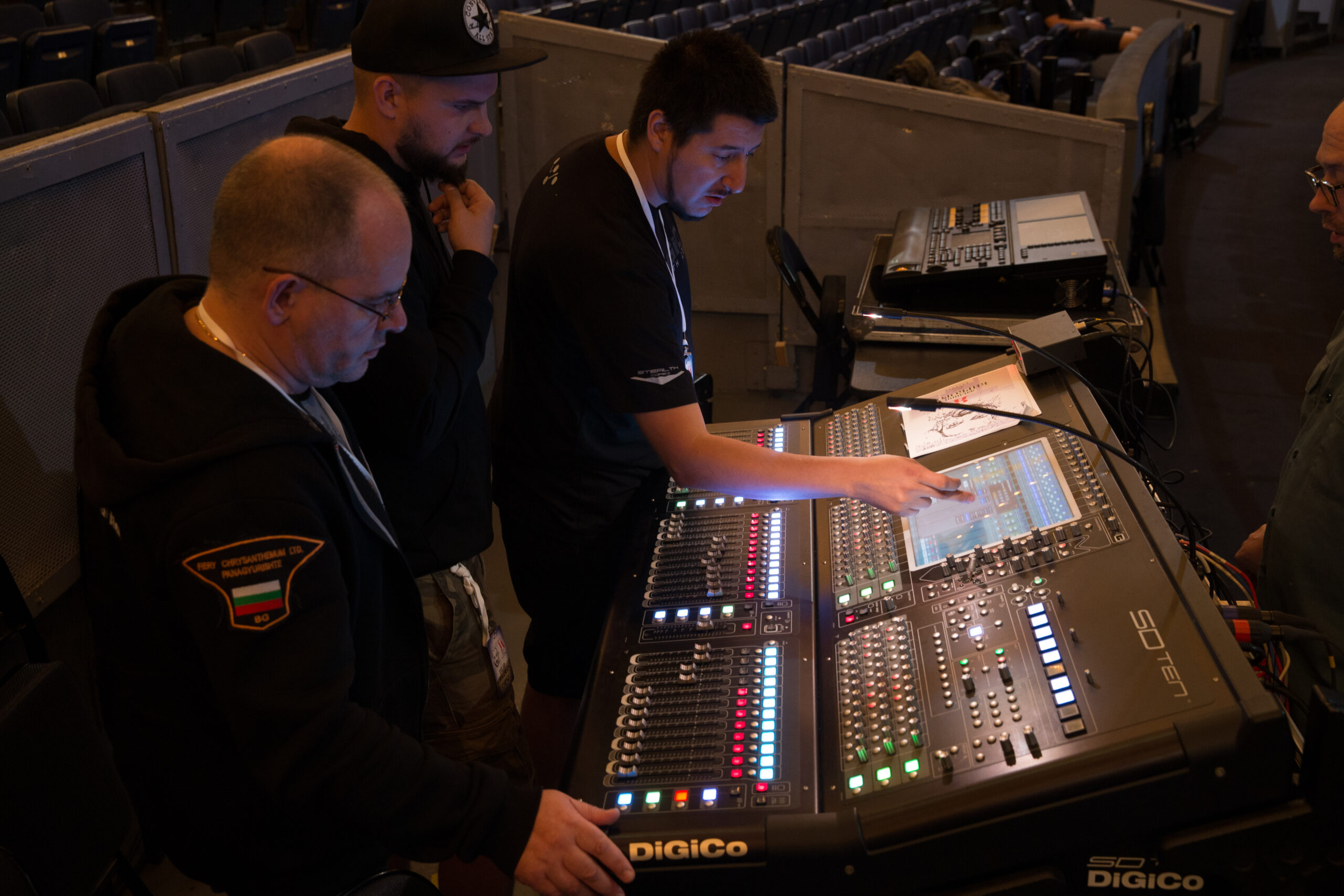
The speaker’s voice bounced around the convention hall, creating a smeared echo that made every word seem to trail itself. Attendees in the back strained to understand, the intelligibility destroyed by reverberation that turned speech into noise. Large event spaces without acoustic treatment create these challenges routinely but solutions exist that production teams can implement to eliminate echo and improve intelligibility even in challenging acoustic environments.
Understanding Echo and Reverberation
Reverberation occurs when sound reflects off surfaces, creating multiple delayed copies of the original signal that arrive at listeners’ ears over time. Short reverberation times (under 1 second) can add pleasant ambiance; long reverberation (over 2 seconds) destroys speech intelligibility as syllables blur together. RT60 the time for sound to decay by 60dB quantifies reverberation character. Convention centers and ballrooms commonly exhibit RT60 values of 3-5 seconds without treatment, far exceeding acceptable levels for speech reinforcement.
Distinct echoes single reflections arriving more than 50 milliseconds after direct sound create different problems than diffuse reverberation. A reflection from a distant back wall might arrive with sufficient delay and level to be perceived as a separate sound, creating the disturbing sense of hearing words twice. These discrete reflections often prove more objectionable than general reverberation because their distinctness draws conscious attention.
Speaker System Design for Echo Control
Distributed speaker systems position sound sources closer to listeners, reducing the distance sound travels and the opportunity for problematic reflections. Rather than blasting from main speakers at the stage, distributed systems place smaller speakers throughout the venue, each covering a limited area at moderate level. Delay alignment ensures that distributed speakers support rather than compete with main systems listeners hear coherent sound rather than confusing multiple arrivals. Products like JBL AWC series and Bose DesignMax ceiling speakers serve distributed applications effectively.
Line array speakers from L-Acoustics, d&b audiotechnik, and Meyer Sound provide directional control that reduces energy hitting reflective surfaces. The tight vertical coverage of properly designed line arrays directs sound at audiences rather than ceilings and walls, reducing the excitation of room reverberation. Combined with appropriate system tuning using Smaart or SysTune measurement platforms, line arrays can achieve acceptable intelligibility in spaces that defeat conventional speaker approaches.
Acoustic Treatment Options
Temporary acoustic treatment adds absorption that venues lack permanently. Draped fabric from companies like Rose Brand and Gerriets provides absorption when installed over reflective surfaces. Acoustic panels from Auralex and GIK Acoustics can be deployed on stands or hung from available rigging points. These treatments work best targeting first reflection points the surfaces where direct sound first bounces before reaching listeners.
Audience attendance itself provides significant absorption. A crowded room exhibits dramatically lower reverberation than the same room empty human bodies and clothing absorb sound effectively. This phenomenon explains why events sometimes sound notably different during soundcheck versus show: the acoustic environment changes substantially when attendees arrive. Productions should account for this difference, recognizing that aggressive EQ cuts applied during empty-room soundcheck may prove unnecessary once audiences fill the space.
Echo elimination in large spaces combines appropriate speaker system design, measurement-based tuning, and acoustic treatment where practical. Productions that approach acoustic challenges systematically measuring the problem, applying appropriate solutions, and verifying results achieve intelligibility in spaces that seem acoustically hopeless. The reward for this effort: audiences who actually understand what speakers say, enabling events to fulfill their communication purposes rather than frustrating attendees with incomprehensible muddle.
