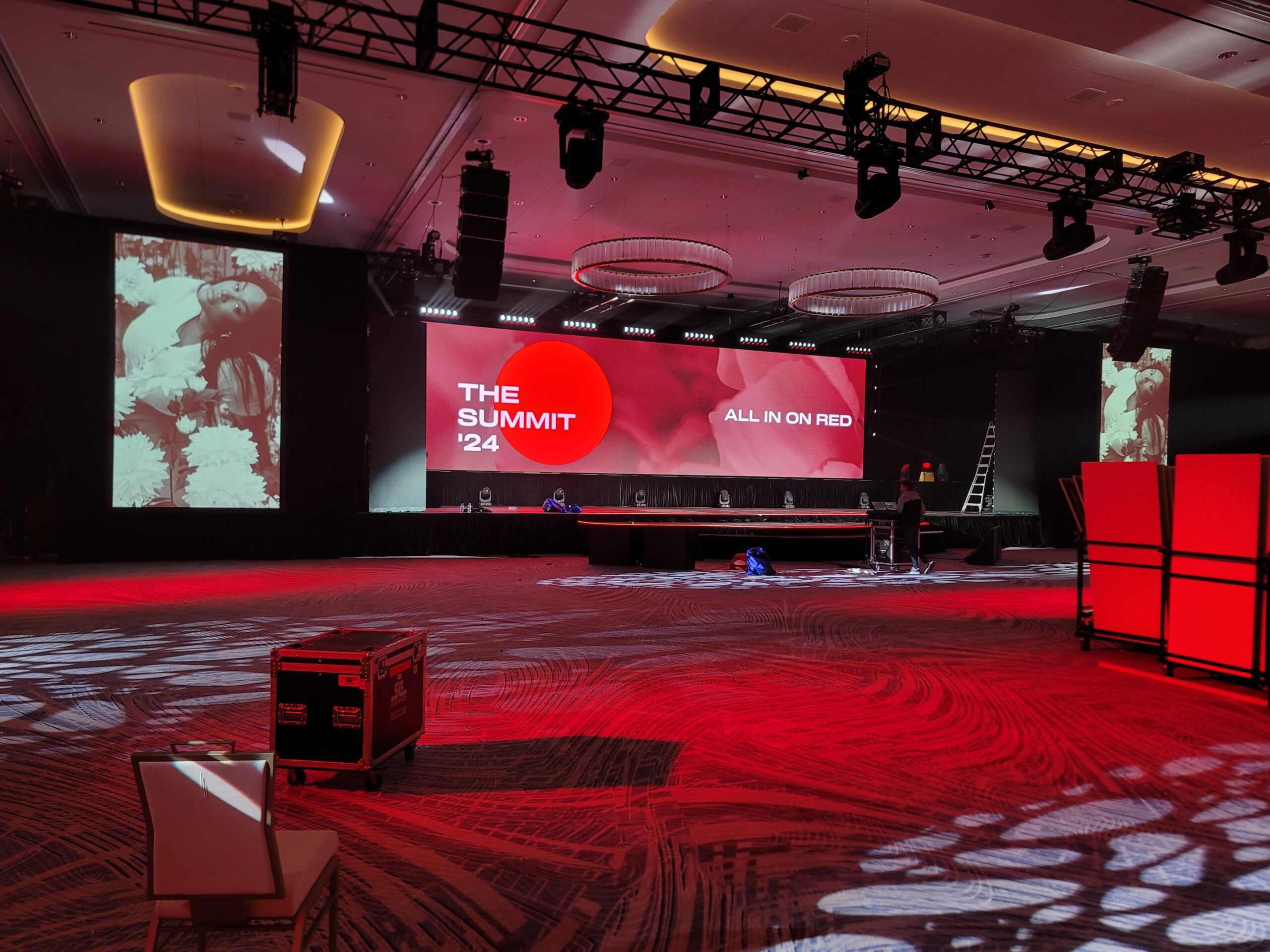
Live streaming has become essential for events reaching beyond physical attendance. The visual quality of streams directly impacts viewer engagement and brand perception. LED walls contribute to streaming quality in ways that green screens and physical sets cannot match, explaining why professional broadcasts increasingly rely on LED technology.
Eliminating Green Screen Limitations
Traditional virtual backgrounds using green screen technology require precise lighting to achieve clean keying. Any shadows, folds, or lighting inconsistencies create visible artifacts around subjects. Green spill reflects off subjects and objects, contaminating colors and requiring post-processing correction. These technical demands limit spontaneity and require expertise many streaming operations lack.
LED walls display actual backgrounds visible to cameras without keying or compositing. Subjects interact naturally with their environment because the environment genuinely exists behind them. Reflections on glossy surfaces, catch lights in eyes, and color spill all appear natural because they come from the actual displayed content rather than being artificially added.
Camera-Friendly Refresh Rates
LED displays refresh their image at rates measured in Hertz, but camera sensors capture images at specific shutter intervals that may not align with display refresh cycles. Mismatch between camera and display timing creates visible scan lines, flickering, or banding in captured footage. These artifacts destroy the professional appearance streaming productions require.
Professional LED walls designed for broadcast achieve refresh rates of 3,840Hz or higher, eliminating visible artifacts at any practical camera shutter speed. This specification has become critical as streaming quality expectations increase. Consumer-grade displays with refresh rates below 1,920Hz may appear fine to human observers but create obvious problems when captured by cameras.
Dynamic Content Flexibility
LED backgrounds change instantly between scenes without physical set changes. A corporate stream can transition from a branded environment to a product demonstration backdrop to a presentation format in seconds. This flexibility enables varied visual experiences within single productions without the delays and crew required for physical set changes.
Content can respond to program elements in real-time. Data visualizations update as statistics change. Social media feeds scroll behind hosts. Weather maps animate during forecasts. The background becomes an active production element rather than a static set piece, increasing engagement while reducing physical production complexity.
Consistent Lighting Environment
LED walls contribute to overall scene lighting, providing fill light on subjects from the displayed content. This interactive lighting creates natural-looking scenes where subject lighting matches background lighting automatically. A bright outdoor scene displayed behind a subject provides realistic ambient fill, while a dark nighttime scene creates appropriately moody lighting.
This environmental interaction eliminates the flat, disconnected appearance of green screen productions where subjects appear pasted onto backgrounds with mismatched lighting. Viewers may not consciously identify the lighting match, but they perceive scenes as more natural and believable. This unconscious reaction improves viewer engagement and retention.
Depth and Dimensional Perception
LED walls create genuine depth when combined with appropriate content design. Parallax effects on moving shots reveal different layers of background content responding to camera movement, creating dimensional perception impossible with static backgrounds. This depth cue tells viewers’ brains the background is real, even when displaying entirely virtual environments.
Virtual production techniques developed for film and television apply equally to live streaming. Camera tracking systems enable real-time perspective adjustment that maintains correct depth relationships as cameras move. While simpler streaming setups may not use full tracking, even static camera positions benefit from LED walls’ inherent depth over flat backgrounds.
Color Accuracy and Consistency
Professional LED walls achieve wide color gamut coverage and accurate color reproduction. Content designed with specific brand colors displays accurately, maintaining visual identity across streaming productions. This consistency matters for corporate communications where brand standards must be maintained precisely.
LED display brightness enables high dynamic range content that makes streams more visually compelling. Bright highlights and deep blacks create images with impact that compressed streaming formats otherwise diminish. Starting with high-quality source material before compression produces better final results than trying to enhance lower-quality captures.
Production Value Within Budget
Building physical sets for multiple streaming shows requires space, materials, and crew for construction and changes. LED walls display unlimited virtual sets from a single installation. The investment in LED technology enables production value levels that would be prohibitively expensive with traditional approaches.
Recurring streaming productions particularly benefit from LED efficiency. A studio producing daily content can feature different environments for each program without physical changes. The rapid changeover between shows maximizes facility utilization while delivering unique visual experiences for each production.
Technical Integration Considerations
Integrating LED walls into streaming workflows requires attention to signal routing and timing. Video content must reach LED displays in synchronization with camera capture to avoid tearing or frame mismatch. Professional systems use genlock to synchronize all components to a common timing reference.
Content resolution should match or exceed LED wall native resolution to avoid scaling artifacts. Camera framing determines which portion of the LED surface appears in shots, influencing content design. Working with experienced integrators ensures technical specifications support creative intentions.
Viewer Experience Impact
The technical improvements LED walls provide translate to measurable viewer experience benefits. Higher quality streams maintain attention longer than visually poor alternatives. Professional appearance builds credibility for content and presenters. These factors directly impact streaming success metrics including view duration, engagement, and conversion.
As streaming continues growing as a communication medium, production quality expectations increase correspondingly. LED wall technology provides accessible paths to professional-grade streaming that once required studio facilities and specialized expertise. The technology democratizes high-quality streaming production.
LED walls have become fundamental infrastructure for streaming operations prioritizing quality. The investment in LED technology delivers returns through improved viewer engagement, increased production flexibility, and enhanced brand perception across all streaming applications.
