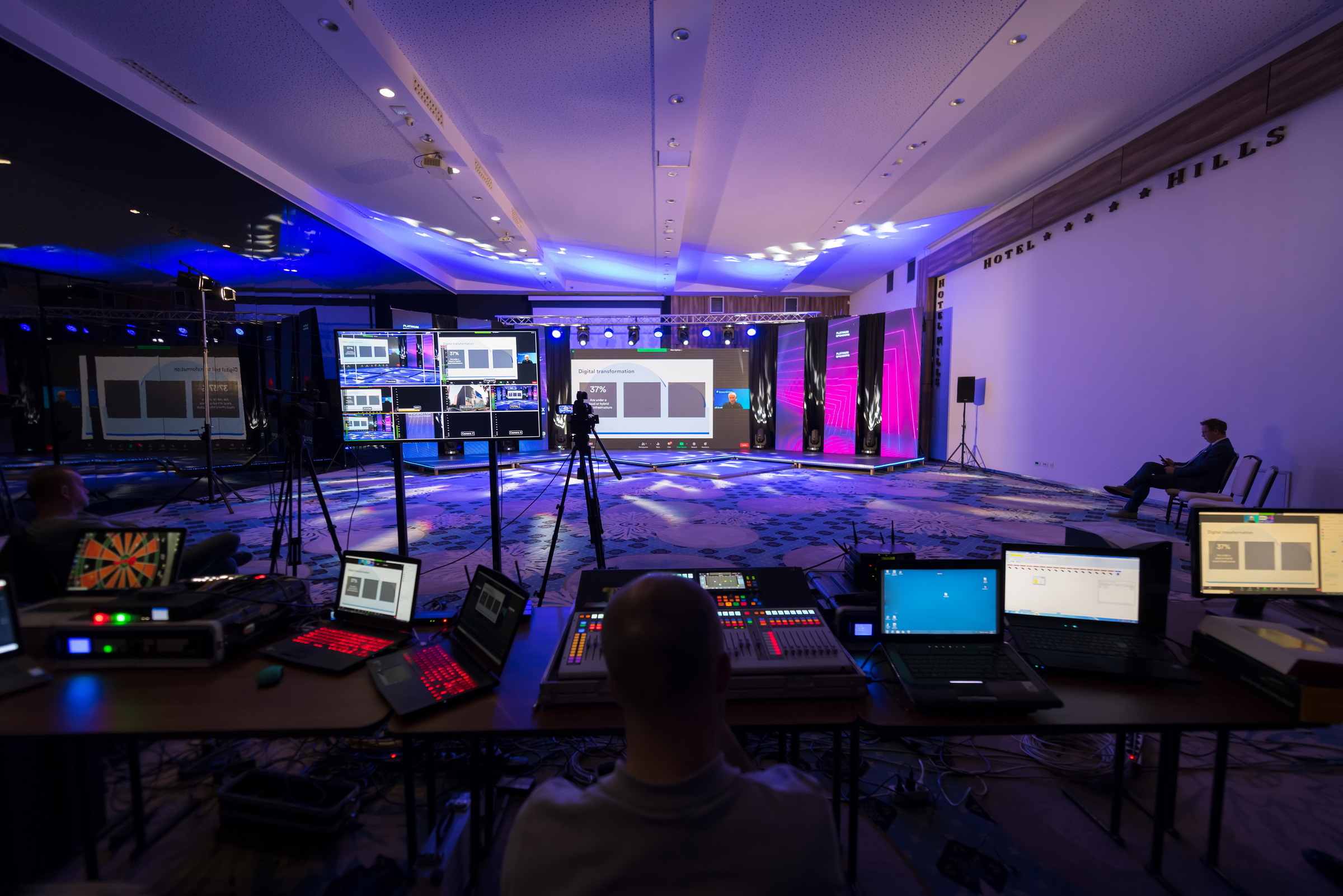
The lighting board operator called for cue 47—and nothing happened. A frantic few seconds followed as they discovered the console had lost connection to the dimmer racks. The problem: a DMX cable developed a short during the show, interrupting the data stream that controls modern event lighting. Understanding how DMX controls lighting and how to troubleshoot when it fails empowers production teams to prevent problems and resolve them quickly when they occur.
DMX Protocol Fundamentals
DMX512 (Digital Multiplex with 512 addresses) emerged in 1986 as a standard protocol for controlling stage lighting. The protocol transmits 512 channels of data, with each channel carrying values from 0-255 representing intensity or parameter levels. A simple dimmer uses one channel for intensity; a complex moving light might use 30+ channels for pan, tilt, color, gobo, intensity, and other functions. The USITT (United States Institute for Theatre Technology) maintains the standard, with the current ANSI E1.11 specification defining technical requirements.
Each lighting fixture receives a DMX address—a starting channel number within the 512-channel universe. A moving head addressed at channel 1 uses channels 1 through whatever count its function set requires. The next fixture might start at channel 40 to avoid overlap. Consoles like GrandMA3, ETC EOS, and Chamsys MagicQ translate operator inputs into DMX data streams that fixtures interpret as commands. The console doesn’t “know” what fixtures are connected it simply outputs channel values that addressed fixtures receive and interpret.
Distribution and Network Topology
DMX travels through 5-pin XLR cables from console to fixtures in daisy-chain topology each fixture passes the signal to the next. The specification limits runs to approximately 300 meters total, with DMX splitters and opto-isolators enabling longer distances and multiple branches. Products from Doug Fleenor Design, City Theatrical, and Chauvet DMX-AN series provide distribution infrastructure that professional installations require.
Network-based DMX distribution has largely supplanted traditional cable runs for complex installations. Art-Net, sACN (E1.31), and proprietary protocols transmit DMX over Ethernet, with nodes at fixture locations converting network data back to traditional DMX. This approach enables single-cable infrastructure carrying hundreds of DMX universes, simplified signal routing through network switches, and integration with IT infrastructure common in modern venues. The Luminex LumiNode and Pathport series exemplify professional DMX/Ethernet infrastructure.
Troubleshooting Common Issues
When fixtures don’t respond to console commands, systematic troubleshooting identifies problems efficiently. Verify addressing is the fixture set to the address the console expects? Check cable continuity DMX testers from City Theatrical and Swisson verify signal presence and quality. Confirm termination proper 120-ohm termination at chain ends prevents signal reflection that causes erratic behavior. Isolate problems by testing fixtures independently does a fixture work when connected directly to the console?
Ground loops and electrical interference create subtle problems that mimic other failures. Fixtures may flicker, respond intermittently, or execute commands incorrectly. Opto-isolators break ground connections between system sections, often resolving interference issues. Professional installations increasingly use wireless DMX from LumenRadio and City Theatrical Multiverse to eliminate cable-related issues entirely for appropriate applications.
DMX remains the foundation of professional lighting control despite being decades old. Its simplicity, reliability, and universal support make it the common language that consoles and fixtures share. Production teams who understand DMX fundamentals can configure systems confidently, troubleshoot problems effectively, and recognize when more sophisticated control approaches serve their needs better. This foundational knowledge enables the more advanced techniques that create memorable lighting designs.
