Understanding Chroma Key Technology and Applications
Chroma key technology, commonly known as green screen or blue screen compositing, has evolved from a specialized film technique into an essential tool for modern video production. This technology, generating over $3.2 billion in production services annually, enables creators to replace colored backgrounds with virtually any imagery, from simple office environments to elaborate fantasy worlds. The process relies on isolating specific color ranges and making them transparent, allowing different video layers to combine seamlessly. Professional implementation requires understanding of color science, lighting principles, and compositing techniques that separate amateur attempts from broadcast-quality results.
The versatility of chroma key production spans numerous industries and applications, making it a valuable service offering for audio-visual production companies. Corporate clients utilize green screen for professional presentations, training videos, and virtual events, eliminating location costs while maintaining polished appearances. Educational content creators produce engaging lessons with dynamic backgrounds that enhance learning experiences. News organizations and weather broadcasts rely on chroma key for informative graphics and map displays. The gaming and streaming industry has embraced green screen technology, with content creators investing $500-2,000 in home studio setups for professional-looking broadcasts.
Market demand continues growing as remote work and virtual communication become permanent fixtures in business operations. Virtual production techniques combining green screen with real-time rendering engines like Unreal Engine are revolutionizing film and television production. Studies indicate that videos utilizing professional chroma key effects achieve 65% higher engagement rates than static background content. The accessibility of powerful compositing software and affordable lighting equipment has lowered entry barriers, though achieving professional results still requires significant expertise and proper equipment investment.
Setting Up Professional Green Screen Studios
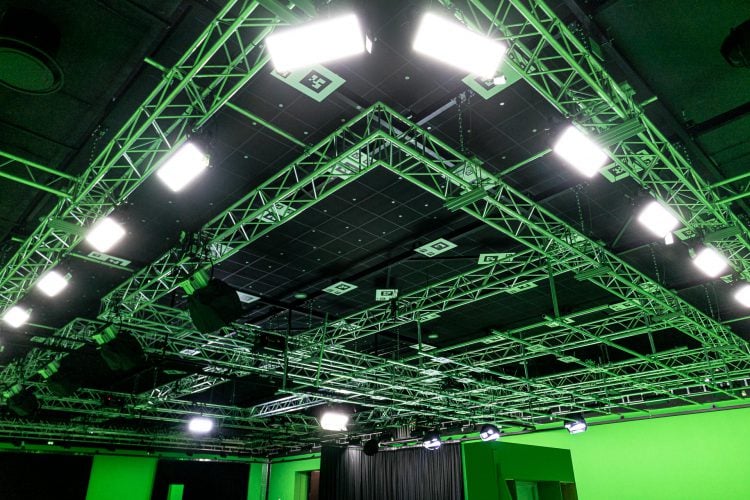
Professional green screen studio construction requires careful attention to space, materials, and infrastructure to achieve consistent, high-quality results. The minimum practical space for basic green screen work measures 12×15 feet, allowing adequate distance between subject and background to prevent color spill. Professional studios typically allocate 20×30 feet or larger spaces, enabling full-body shots, multiple subjects, and complex lighting setups. Ceiling height of at least 10 feet accommodates overhead lighting and prevents shadows from ceiling-mounted equipment. These spatial requirements influence studio rental rates, which range from $100-500 hourly depending on location and amenities.
Background material selection significantly impacts keying quality and production efficiency. Painted walls using specially formulated chroma key paint provide permanent, wrinkle-free surfaces ideal for fixed studios. Digital green paint from companies like Rosco costs $80-120 per gallon, covering approximately 300 square feet. Fabric backgrounds offer portability and versatility but require careful stretching to eliminate wrinkles that complicate keying. Professional muslin or synthetic backgrounds measuring 10×20 feet cost $150-400. Retractable background systems enable quick color changes between green and blue screens, accommodating different wardrobe requirements. Curved cycloramas eliminate corner shadows, creating infinite background illusions essential for full-body shots and movement.
Studio infrastructure extends beyond visible elements to include power distribution, ventilation, and connectivity systems. Adequate electrical capacity supporting multiple lights, cameras, and computers requires dedicated circuits providing at least 60 amps. Climate control maintains comfortable temperatures despite heat from lighting equipment, preventing talent discomfort and makeup issues. Network infrastructure supporting live streaming and remote collaboration has become essential, with fiber optic connections enabling uncompressed video transmission. Sound treatment, often overlooked in green screen studios, reduces echo and improves audio quality for integrated production workflows.
Lighting Techniques for Perfect Keying
Lighting represents the most critical factor in achieving clean, professional chroma key effects, with proper illumination making the difference between hours of post-production work and simple one-click keying. Even lighting across the entire green screen ensures consistent color values that key uniformly without leaving edges or holes. Professional setups typically use 4-8 lights dedicated to background illumination, separate from subject lighting. LED panels have revolutionized green screen lighting, offering consistent color temperature, minimal heat generation, and energy efficiency compared to traditional tungsten or fluorescent fixtures.
The three-zone lighting approach separates background, subject, and fill lighting for maximum control and quality. Background lights positioned at 45-degree angles from either side create even coverage without hotspots or shadows. Light meters ensure consistent exposure across the entire surface, with variations not exceeding 1/3 stop for optimal keying. Subject lighting requires adequate separation from the background, typically 6-10 feet, preventing green spill that creates color contamination. Key lights provide primary illumination while maintaining natural-looking shadows that integrate with virtual backgrounds. Fill lights reduce contrast without eliminating depth, while hair lights separate subjects from backgrounds.
Color temperature consistency between all light sources prevents mixed lighting that complicates both keying and color grading. Daylight-balanced 5600K LEDs match window light and work well with green screens, though tungsten 3200K setups remain viable with proper white balance. CRI (Color Rendering Index) ratings above 95 ensure accurate color reproduction crucial for skin tones and wardrobe. Avoiding spill requires careful angle management and sometimes using minus green gels on edge lights. Flags and barn doors control light spread, preventing unwanted reflections on shiny surfaces or glasses that reveal the green screen environment.
Camera Settings and Technical Considerations
Camera configuration for chroma key production requires specific settings that prioritize clean edges and minimal noise over typical aesthetic considerations. Lower ISO values between 100-400 minimize digital noise that complicates keying processes, even if requiring additional lighting. Aperture settings around f/5.6-f/8 provide sufficient depth of field to keep subjects sharp while slightly softening backgrounds, aiding separation. Shutter speeds following the 180-degree rule maintain natural motion blur that helps composite elements blend convincingly. These technical parameters often conflict with creative preferences, requiring compromise and clear client communication.
Resolution and codec selection significantly impact keying quality and post-production flexibility. 4K acquisition provides additional detail for edge refinement and allows reframing without quality loss. 10-bit 4:2:2 color sampling preserves color information crucial for clean key extraction compared to 8-bit 4:2:0 common in consumer cameras. RAW or ProRes recording formats maintain maximum quality though requiring substantial storage, with hour-long sessions generating 500GB-1TB of data. Modern cameras like the Blackmagic URSA Mini Pro and Sony FX9 offer optimized chroma key modes that adjust internal processing for cleaner edges.
Progressive scanning eliminates interlacing artifacts that complicate keying and create edge problems. Frame rates should match final delivery requirements, avoiding unnecessary conversion that degrades quality. High frame rates of 60-120fps enable slow-motion effects while maintaining sharp edges during movement. Rolling shutter, common in CMOS sensors, creates motion artifacts requiring careful camera movement or post-production correction. Global shutter cameras eliminate these issues but command premium prices. Focus pulling during shots requires experienced operators, as focus breathing changes framing and can reveal green screen edges.
Post-Production and Compositing Workflows
Post-production transforms green screen footage into seamless composite images through sophisticated keying, color correction, and integration techniques. Professional compositing software including Adobe After Effects, Nuke, and DaVinci Resolve Fusion offers advanced keying tools beyond basic color selection. The initial keying pass removes the primary green background, typically achieving 80-90% completion before refinement begins. Multiple keying methods including luminance keys, difference keys, and advanced algorithms like Keylight or Primatte provide options for challenging footage.
Edge refinement separates professional results from amateur attempts, requiring careful attention to hair detail, transparent objects, and motion blur. Spill suppression removes green color contamination from subject edges without affecting natural colors. Edge feathering creates subtle transitions that prevent harsh cutouts while maintaining detail. Garbage masks isolate subjects from unwanted elements, reducing processing requirements and improving key quality. Core masks protect subject interiors from aggressive edge processing. These refinement steps typically require 2-4 hours per finished minute for complex compositions.
Color matching between foreground subjects and background plates ensures believable integration that doesn’t immediately reveal the composite nature. Color grading must account for virtual environment lighting, adjusting subject highlights and shadows to match background illumination. Light wrap simulates edge lighting from bright backgrounds, selling the illusion of actual presence. Atmospheric perspective adds haze to distant elements, creating depth perception. Motion tracking ensures background movement matches camera motion, preventing sliding that breaks illusion. Shadow generation grounds subjects in virtual environments, with contact shadows crucial for standing or sitting positions.
Business Models and Service Offerings
Green screen production services offer diverse revenue streams with varying complexity and profitability levels. Basic green screen studio rental without operators generates $100-500 hourly, providing passive income for equipped facilities. Full-service production including crew, equipment, and basic compositing commands $2,000-10,000 per day depending on project complexity. Post-production services for client-provided footage charge $100-300 hourly for professional keying and compositing. Package deals combining studio, production, and post-production provide predictable pricing that appeals to corporate clients while ensuring profitable margins.
Virtual production services represent the premium market segment, with LED wall virtual production stages commanding $10,000-50,000 daily. Real-time compositing for live broadcasts requires specialized equipment and operators charging $500-1,500 hourly. Motion capture integration with green screen expands into gaming and animation markets worth billions annually. Training and consultation services help organizations establish internal green screen capabilities, generating $1,000-5,000 per engagement. Equipment rental including portable green screens, lighting kits, and accessories provides additional revenue without labor requirements.
Subscription models for regular content creators offer predictable recurring revenue through monthly studio access or production packages. Educational institutions represent stable clients requiring consistent green screen services for online learning content. Corporate training departments increasingly produce internal content, requiring ongoing support and facilities. Marketing agencies outsource green screen production for client projects, providing steady project flow. Live streaming services for virtual events exploded during the pandemic and remain strong, with hybrid events becoming the new standard requiring sophisticated green screen integration.
Conclusion
Green screen and chroma key production techniques have evolved from specialized film effects to essential tools in modern content creation, offering substantial opportunities for audio-visual production companies. Success requires mastering technical aspects of lighting, camera operation, and post-production while understanding creative applications that deliver client value. The combination of proper studio setup, professional equipment, and refined techniques enables production of seamless composites that enhance storytelling and communication effectiveness. Growing demand across corporate, educational, and entertainment sectors ensures continued market expansion for skilled practitioners. Investment in quality equipment, ongoing education, and efficient workflows positions production companies to capture premium rates in this specialized field. As virtual production technologies advance and remote communication becomes permanently embedded in business culture, green screen services will remain crucial components of professional video production. The key to long-term success lies in balancing technical excellence with creative innovation while maintaining efficient operations that deliver consistent, high-quality results for diverse client needs.
