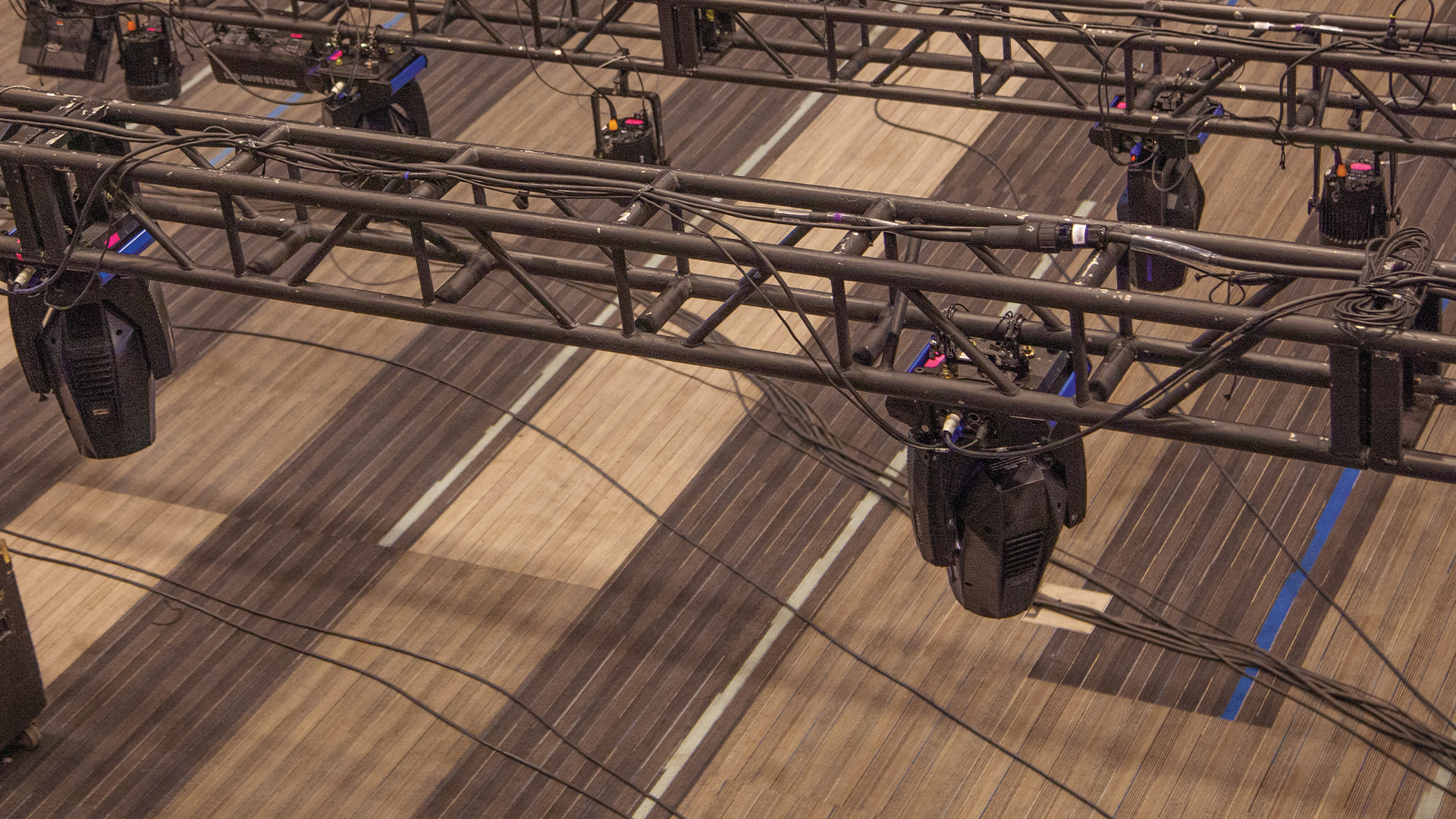
The aluminum truss structure swayed gently with the bass frequencies, which would have been aesthetically interesting if the rigging engineer hadn’t specified it as completely rigid. Forty thousand pounds of lighting, video, and audio equipment hung from that grid, and it had apparently decided to interpret the music through modern dance. This wasn’t supposed to happen. But in live production rigging, what’s supposed to happen and what actually happens maintain a complicated relationship.
The Architecture of Suspension
Modern entertainment rigging traces its roots to theatrical flying systems developed in the nineteenth century. The counterweight fly systems that moved scenery in Victorian theaters evolved into the sophisticated motor-driven solutions used today. CM Lodestar chain hoists, introduced in 1966, became an industry standard that’s still manufactured today—testament to how fundamental good rigging design remains across decades of technological change.
But the loads those early riggers managed seem almost quaint compared to contemporary productions. A major concert tour might fly fifty thousand pounds of equipment from a ground support system or venue ceiling points. LED video walls that didn’t exist twenty years ago now comprise significant portions of total rigging weight. The structural engineering required to safely suspend modern productions has become a specialized discipline unto itself.
When Truss Meets Bass
The dancing truss incident occurred at an indoor arena show with a particularly bass-heavy artist. The Tyler Truss GT series grid had been designed with appropriate load factors, installed by a certified head rigger with twenty years of experience, and inspected by the venue’s in-house engineer. Every safety protocol had been followed. Yet when the subwoofers engaged, the grid began oscillating.
The phenomenon is called sympathetic resonance—when the frequency of an external force matches the natural frequency of a structure. Every physical object has frequencies at which it naturally wants to vibrate; apply energy at those frequencies, and the vibration amplifies dramatically. The bass from the Meyer Sound 1100-LFC subwoofers had found the grid’s resonant frequency.
Emergency Response Protocol
The production rigger made a rapid decision that probably prevented catastrophe. Rather than stopping the show—which would have created its own crowd management challenges—the crew implemented real-time frequency management. The system engineer notched out the specific frequency range causing resonance while the rigger deployed additional guy wires to triangulate the structure and dampen oscillation.
This kind of improvised solution requires deep technical knowledge working alongside production instincts. The FOH engineer adjusted EQ curves to minimize energy in the problematic range without destroying the show’s low-end impact. The lighting director dimmed fixtures to reduce load stress during peak oscillation periods. The tour manager coordinated all departments through the crisis without alerting the artist, who performed obliviously while his crew fought structural physics.
Load Cell Revelations
Modern rigging monitoring systems provide data that earlier generations could only estimate. BroadWeigh load cells and similar technologies measure real-time forces on rigging points, alerting crews to developing problems before they become visible. That arena show’s load monitoring system showed dramatic force fluctuations during the resonance event—data that later informed structural modifications for subsequent tour dates.
The Entertainment Services and Technology Association (ESTA) publishes standards for rigging practices, but interpreting those standards requires experience that no certification fully captures. A load cell reading of 2,500 pounds on a point rated for 3,000 pounds might seem safe on paper. But if that reading is fluctuating rapidly due to dynamic loading, the actual peak forces might far exceed continuous specifications.
The Mathematics of Mayhem
Rigging calculations involve safety factors that seem generous until you understand the forces involved. A typical bridle calculation accounts for static load, dynamic load during motion, shock load potential, and degradation factors for equipment age. The standard 5:1 safety factor means a rigging component rated at 5,000 pounds should never see more than 1,000 pounds of actual load in normal use.
But “normal use” has a flexible definition. When thirty Robe BMFL Spot fixtures simultaneously pan in the same direction, they create lateral forces the original load calculation might not have anticipated. When video content causes an entire LED wall to display bright white, power draw increases and heat buildup accelerates. When pyrotechnic effects generate pressure waves, nearby rigging experiences forces no chart could predict.
The Falling Fixture Fallacy
Contrary to dramatic imagination, major rigging failures rarely involve spectacular collapses during performances. Equipment falls during setup and teardown, when rigging is being manipulated and safety protocols might be relaxed under time pressure. The performer killed at an Indiana State Fair in 2011 died not because of entertainment rigging failure but because of a temporary outdoor stage structure that couldn’t withstand severe weather—a different discipline with different failure modes.
Entertainment rigging’s actual hazards are more insidious. A shackle with a hairline crack might function perfectly for months before failing at exactly the wrong moment. A motor brake might slip slowly enough that daily inspections don’t catch the drift until equipment has descended into a sight line. These gradual failures kill shows and occasionally people—but they don’t make headlines.
Automation’s Double Edge
Automated rigging systems have revolutionized scenic movement possibilities. Kinesys Apex and TAIT Navigator systems enable precise, repeatable movements that manual operation could never match. Productions now feature performers suspended on flying rigs, LED panels descending through complex choreography, scenic elements that reconfigure throughout shows.
But automation introduces programming failures alongside mechanical ones. A movement sequence coded incorrectly might send equipment crashing into performers or other scenic elements. Position limits can be set wrong, allowing motors to drive equipment beyond safe travel. Networking failures can leave automated elements frozen mid-motion or, worse, moving without operator control.
The Integration Challenge
Contemporary productions require rigging coordination across multiple disciplines that historically operated independently. The lighting designer wants fixtures in specific positions. The video engineer needs LED panels oriented precisely. The audio crew requires speaker arrays hung at exact heights and angles. The scenic designer envisions flying elements that interact with all of the above.
Reconciling these requirements demands sophisticated pre-production planning using tools like Vectorworks Spotlight and AutoCAD for drafting, combined with structural analysis software that can model complex loading scenarios. The production manager must mediate competing demands, often telling departments they can’t have exactly what they want because the rigging simply won’t support it.
Venue Variability
Touring productions face a particular challenge: every venue presents different rigging conditions. The ceiling grid in one arena might have abundant capacity and convenient pick points. The next venue might require extensive ground support because the roof structure can’t handle touring loads. A theater might have fly galleries perfectly suited for certain equipment while completely unable to accommodate other pieces.
The advance rigger position exists specifically to address this variability. Weeks before the show arrives, the advance rigger visits each venue, evaluating structural capacity, mapping available hang points, and developing site-specific rigging plans. This process catches surprises before they become emergencies—discovering that a venue’s steel certification is outdated, or that renovation work has changed load capacities from what previous tours documented.
Weather and Outdoor Rigging
Outdoor events add environmental variables that indoor productions never consider. Wind loads can easily exceed equipment weight loads in exposed conditions. A temporary stage structure that safely supports its intended load might become a sail in unexpected wind conditions. Rain changes equipment weights as water accumulates on surfaces. Temperature swings affect cable tensions and motor performance.
The Mountain Productions Apex stage system and similar engineered structures include wind speed limits above which loads must be reduced or flown out entirely. Festival rigging crews monitor weather continuously, maintaining communication with meteorological services and venue safety teams. The decision to delay or cancel outdoor events for weather concerns ultimately involves rigging safety more than most other factors.
Training the Next Generation
The ETCP certification (Entertainment Technician Certification Program) represents the industry’s attempt to standardize rigging competency. Riggers pursuing arena certification or theatre certification must demonstrate knowledge of physics, mathematics, and practical application. But certification provides a foundation, not expertise—that comes only from years of field experience under mentorship from senior riggers.
The best head riggers share a certain personality: obsessive attention to detail combined with decisive action under pressure. They’re the first people to arrive at load-in and the last to leave after load-out. They trust their calculations but verify through redundant checks. They’ve developed intuition for equipment behavior that complements their technical knowledge. And they never forget that the gravity they work against shows no mercy to those who underestimate it.
That dancing truss eventually stopped moving—stabilized through improvised engineering and frequency management. The show continued without audience awareness of the drama overhead. But the crew went home with another story for the oral tradition of production rigging: respect the physics, prepare for the unexpected, and never assume that truss wants to stay still just because you told it to.
Keywords: aluminum truss structure, rigging engineer, live production rigging, entertainment rigging, CM Lodestar chain hoists, ground support system, structural engineering, Tyler Truss GT, head rigger, sympathetic resonance, Meyer Sound 1100-LFC, production rigger, system engineer, FOH engineer, tour manager, rigging monitoring systems, BroadWeigh load cells, load monitoring system, Entertainment Services and Technology Association, ESTA, bridle calculation, Robe BMFL Spot, load calculation, LED wall, rigging failures, shackle, motor brake, Kinesys Apex, TAIT Navigator, movement sequence, rigging coordination, lighting designer, video engineer, audio crew, pre-production planning, Vectorworks Spotlight, AutoCAD, production manager, ceiling grid, ground support, advance rigger, temporary stage structure, Mountain Productions Apex, ETCP certification, arena certification, theatre certification, head riggers, production rigging
