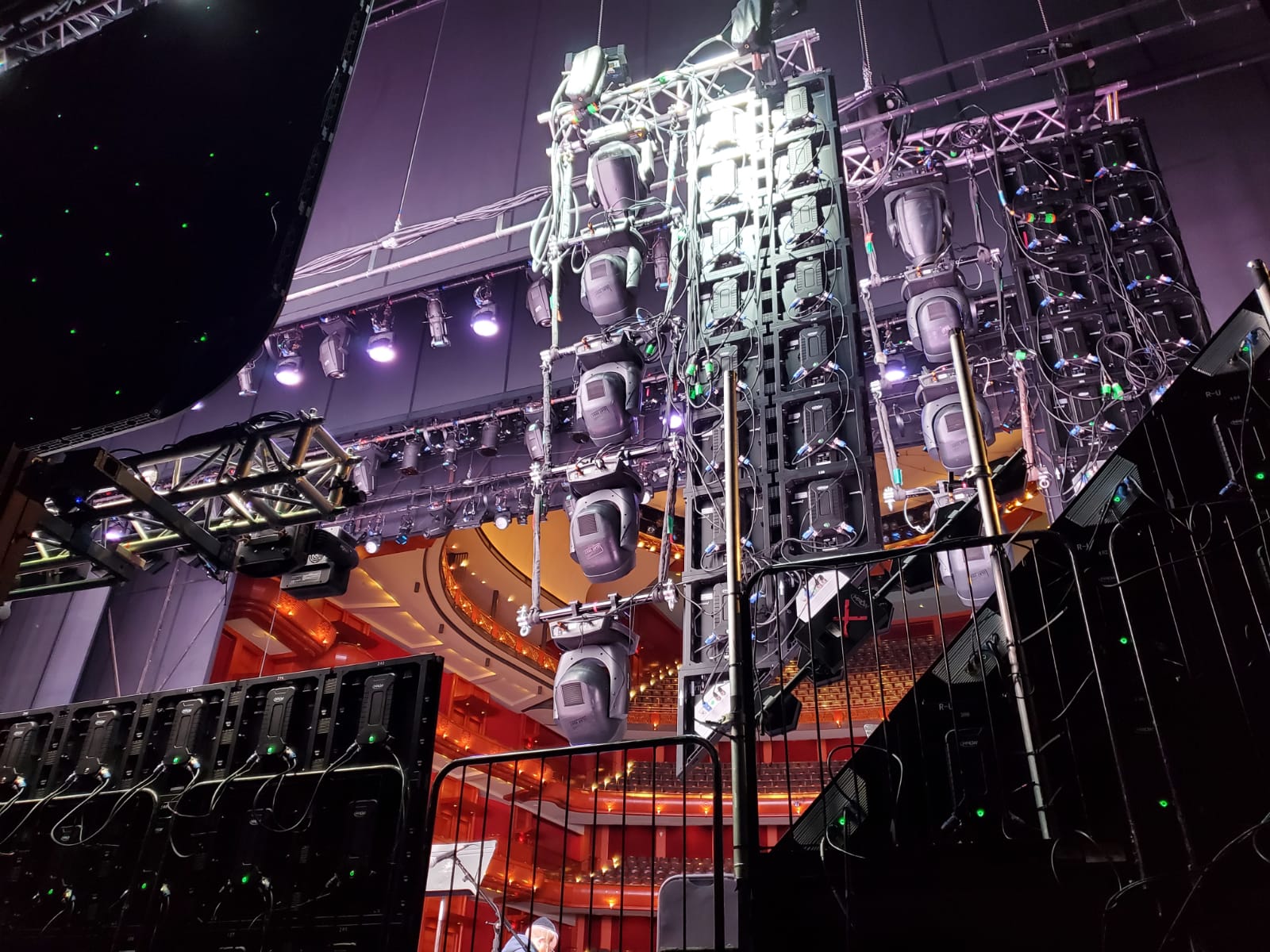
Every followspot operator develops a relationship with their equipment that transcends mere technical operation. These high-intensity instruments possess personalities forged through years of service and some spotlights develop theatrical tendencies that rival the performers they illuminate.
The Diva in the Dome
The Robert Juliat Cyrano stands among the world’s premier followspot fixtures, capable of throwing a powerful beam across arena distances with precision that justifies its premium price. These French-engineered instruments deliver consistent performance under demanding conditions usually. Some develop quirks that suggest awareness of their own importance.
A Cyrano that has worked Broadway shows and arena tours accumulates operational hours that affect mechanical components in subtle ways. The iris might stick momentarily before snapping to the commanded aperture. The color boom could hesitate before rotating, as though the fixture considers whether the requested gel truly suits the moment. Operators learn these personality traits and compensate automatically, working with their equipment’s theatrical inclinations.
Temperature Tantrums
High-intensity discharge lamp fixtures generate substantial heat during operation. The Strong Super Trouper that performs flawlessly at room temperature might express displeasure when ambient conditions climb toward summer extremes. Lamp performance changes with temperature; output shifts color, and intensity variations appear that the fixture seems to introduce for dramatic emphasis rather than technical reasons.
Cooling system efficiency determines how gracefully fixtures handle thermal stress. Units with compromised ventilation fans clogged by years of theatrical dust, filters never replaced despite maintenance schedules demanding it develop thermal behaviors that manifest as unexpected dimming, color shifts, or protective shutdowns at precisely the worst moments. The drama queen spotlight chooses the emotional climax of the show to express its overheating concerns.
Lamp Life Theatrics
Arc lamps approach end-of-life with characteristic signs that experienced operators recognize gradual intensity loss, increasing color temperature shift, and eventual failure. Some lamps deliver these warnings gracefully over hundreds of hours; others expire dramatically mid-performance, plunging stars into darkness during their biggest moments.
The Philips MSR Gold and Osram HTI lamps that power professional followspots carry rated lifespans measured in hundreds of hours. Production companies track lamp hours religiously, replacing before predicted failure yet some lamps seem determined to choose their own exit timing. The spotlight that fails during the curtain call creates memorable stories that circulate through crew conversations for years afterward.
The Pan and Tilt Personality
Manual followspot operation depends on smooth pan and tilt mechanisms that allow operators to track performers with fluid precision. Years of use create wear patterns in bearings and friction surfaces that manifest as distinctive handling characteristics. Some fixtures develop resistance at specific positions, requiring extra pressure to push through sticky spots that the fixture seems to prefer.
The Lycian 1293 known for smooth tracking during its youth might develop preferences about movement direction as components age. Panning left feels different from panning right; tilting down becomes easier than tilting up. Operators adapt to these preferences unconsciously, compensating for mechanical character that makes each fixture unique.
Communication Complications
Modern spotlight systems incorporate intercom integration that allows operators to receive cues from the calling booth. The Clear-Com RS-701 beltpack connected to a spot position might develop audio issues that create communication challenges precisely when clear instruction matters most.
An intermittent cable connection that works fine during soundcheck might fail during the show, leaving operators guessing about upcoming cues. The dramatic spotlight seems to prefer these moments of uncertainty, adding tension to an already demanding job. Some operators develop near-telepathic abilities to anticipate cues without audio confirmation, compensating for equipment that has opinions about when to facilitate communication.
The Color Frame Conspiracy
Followspot color booms and gel frames provide operators with multiple color options accessible through quick rotation. These mechanical systems work reliably when maintained—and develop distinctive behaviors when neglected. A boom that tends to overshoot color positions creates interesting situations when rapid color changes are required.
The Lee filters and Rosco gel mounted in these frames fade and burn through at rates depending on lamp intensity and color characteristics. A deep blue gel might survive one hundred hours while a delicate lavender burns through in twenty. The dramatic spotlight seems to know which colors matter most for any given production and chooses to destroy those gels first.
Historical Spotlight Personalities
The spotlight tradition extends back to the nineteenth-century limelight that gave us the phrase still used for center-stage attention. Those early instruments—literally burning lime in an oxygen-hydrogen flame required operators who understood their equipment’s temperament intimately. Modern discharge lamps are safer but no less prone to personality development.
Legendary Broadway followspots accumulate stories passed down through generations of operators. The fixture that illuminated original productions becomes part of theatrical heritage, its quirks documented in operational notes that read like character studies. New operators learning these instruments discover that technical manuals cannot fully capture the personality their predecessors learned through experience.
Managing Spotlight Divas
Successful spotlight management requires acknowledging that these instruments develop individual characteristics deserving respect. Regular preventive maintenance addresses wear before it becomes dramatic failure. Lamp replacement schedules prevent end-of-life surprises. Lubrication maintains smooth mechanical operation that prevents the sticky spots divas exploit for attention.
The relationship between operator and instrument becomes partnership when equipment personality is acknowledged rather than fought. Operators who understand their fixture’s tendencies can anticipate problems and compensate before they become visible. The spotlight might be a drama queen, but a skilled operator ensures the drama serves the production rather than disrupting it.
Perhaps these fixtures absorb something from the performances they illuminate decades of emotional moments transferring some essence of theatricality into their mechanical souls. The spotlight that has witnessed a thousand curtain calls might naturally develop opinions about how those moments should be lit. Working with these theatrical instruments means accepting their accumulated dramatic experience as part of their operational character.
